
 EN



A Firm First Step into the South African Market
Event: FESPA Africa 2025, held alongside Sign Africa Date: 9–11 September 2025 Venue: Gallagher Convention Centre, Johannesburg, South Africa.
Overview
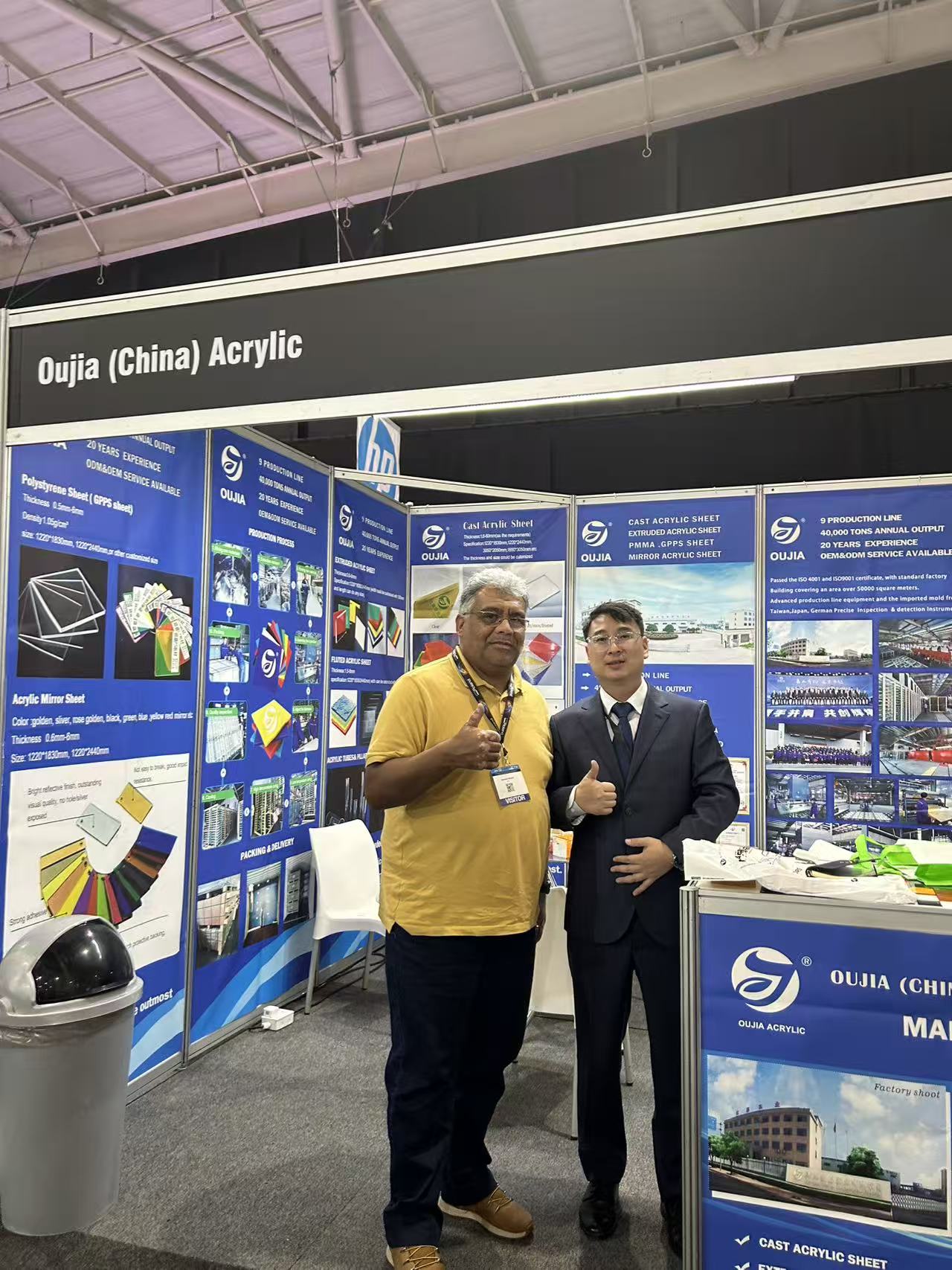
OUJIA Acrylic took part in FESPA Africa 2025 in Johannesburg, marking the company's first structured appearance in the South African market. The decision to exhibit was not a one-off promotional exercise. It was a deliberate entry move: a chance to test the market on its own ground, to meet distributors, fabricators and sign-makers face to face, and to let the product speak for itself in front of buyers who had, until now, known Chinese acrylic mainly through catalogues and intermediaries.
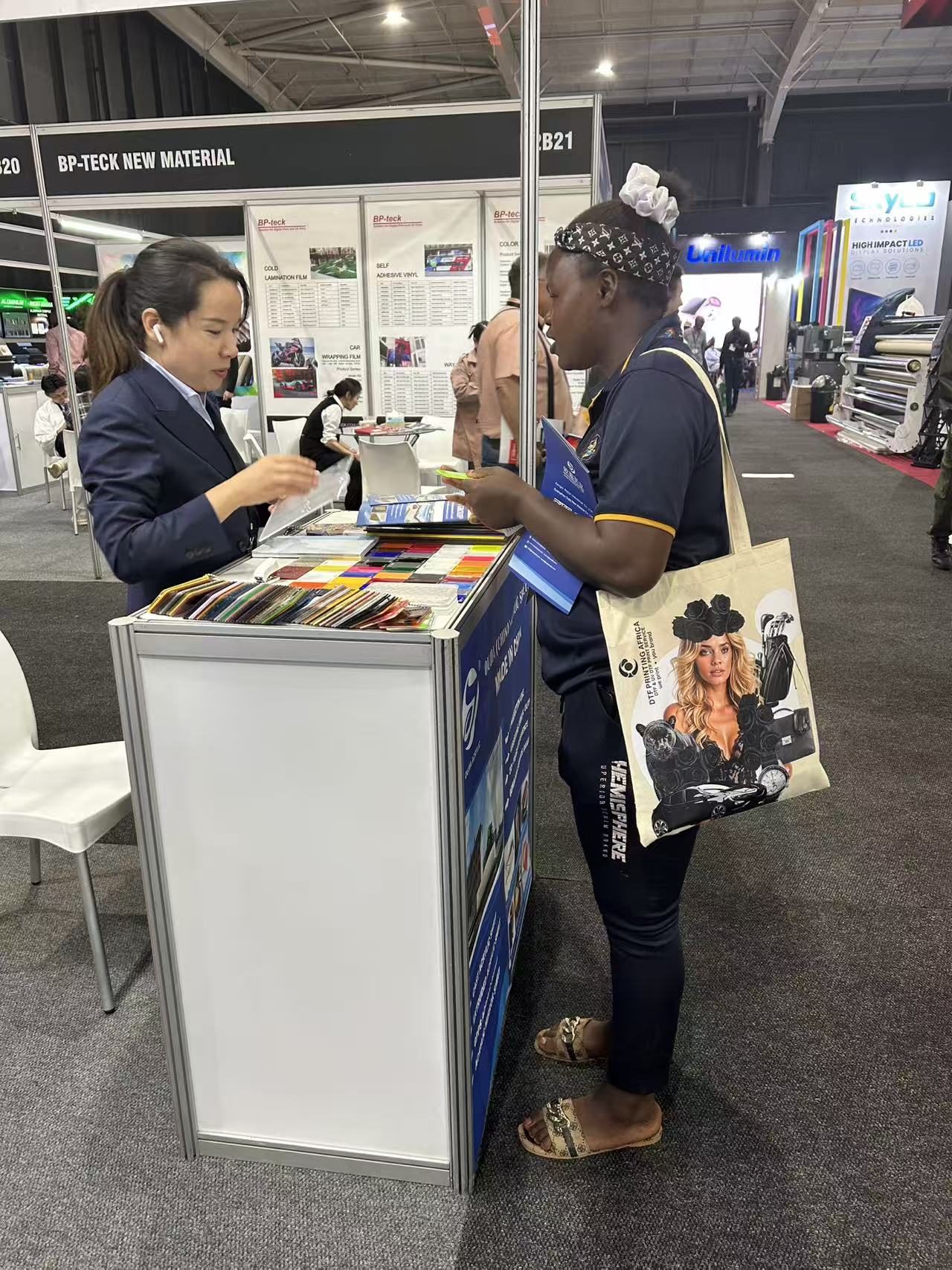
For a manufacturer, exhibitions are the most honest form of market research. Visitors touch the sheet, check the edge, ask about thickness tolerance, UV performance and delivery. What we learned in three days in Johannesburg is worth more than a year of desk research — and it has given us a clear, evidence-based view of where OUJIA fits into the South African supply chain.
Why South Africa, and Why Now
South Africa is the most industrialised economy on the continent and the natural gateway into Southern Africa. Its signage, advertising, furniture and interior-fit-out sectors consume acrylic continuously, yet local production capacity is limited and much of the demand is met through imports. That gap is exactly where a disciplined Chinese manufacturer can add value: consistent quality, stable supply, competitive landed cost and the flexibility to handle both full-container and mixed orders.
FESPA Africa put us in the same hall as the people who actually cut, bend, polish and install the material. That is the right place to start. Entering a market through its processors rather than through abstract market reports gives us a realistic footing — and a firm one.
Working Across the Language Gap
English is the working language of South African business, but in practice proficiency varies widely from one counter to the next. On the stand, many visitors arrived with limited English and a great deal of goodwill. Rather than let that become a barrier, we worked through interpretation — on-site translators, written specifications, samples with bilingual labelling, and patient repetition where needed.
The result was a genuine first-phase connection. Technical questions were answered, specifications were confirmed, and contacts were established that would simply not have existed had we waited for perfect conditions. What carried the conversations was not fluency but enthusiasm on both sides — the shared sense that a working relationship was worth the extra effort. That first phase of matchmaking is now complete, and it gives both sides a foundation to build on.
A Modest Chapter in a Longer Relationship
Trade between China and South Africa has grown steadily, and it rests on more than volumes and tariffs. It rests on ordinary commercial encounters of the kind that took place on our stand: a South African fabricator asking a Chinese supplier what he can deliver, and both sides finding a way to understand each other.
We see our participation in FESPA Africa 2025 as a small but concrete expression of that relationship. Every order fulfilled, every specification met and every delivery kept on schedule strengthens the commercial trust between the two countries — quietly, and more durably than any statement of intent.
Confidence in "Made in China"
South African buyers are demanding, and rightly so. They compare on quality, consistency and after-sales response, not on price alone. That is a market condition Chinese manufacturers should welcome, because it rewards exactly the capabilities we have spent years building: controlled production, stable formulations, reliable packing and the willingness to adapt to a customer's specification.
Our view of the South African market is therefore positive and long-term. Demand is real, the application base is broad, and the import channel is established. What the market needs is not more suppliers, but more dependable ones. We intend to be counted among the latter.
Next Steps
- Follow up on Johannesburg contacts — convert first-phase introductions into sample orders and specification confirmations.
- Localise support — build a bilingual technical and commercial document set so that language never again slows a technical decision.
- Develop channel partners — identify two to three established distributors or fabricators in Gauteng and the Western Cape to represent OUJIA on the ground.
- Broaden the trade footprint — use repeat transactions, not one-off shipments, as the measure of success, and let consistent delivery do the work of relationship-building.


 ONLINE